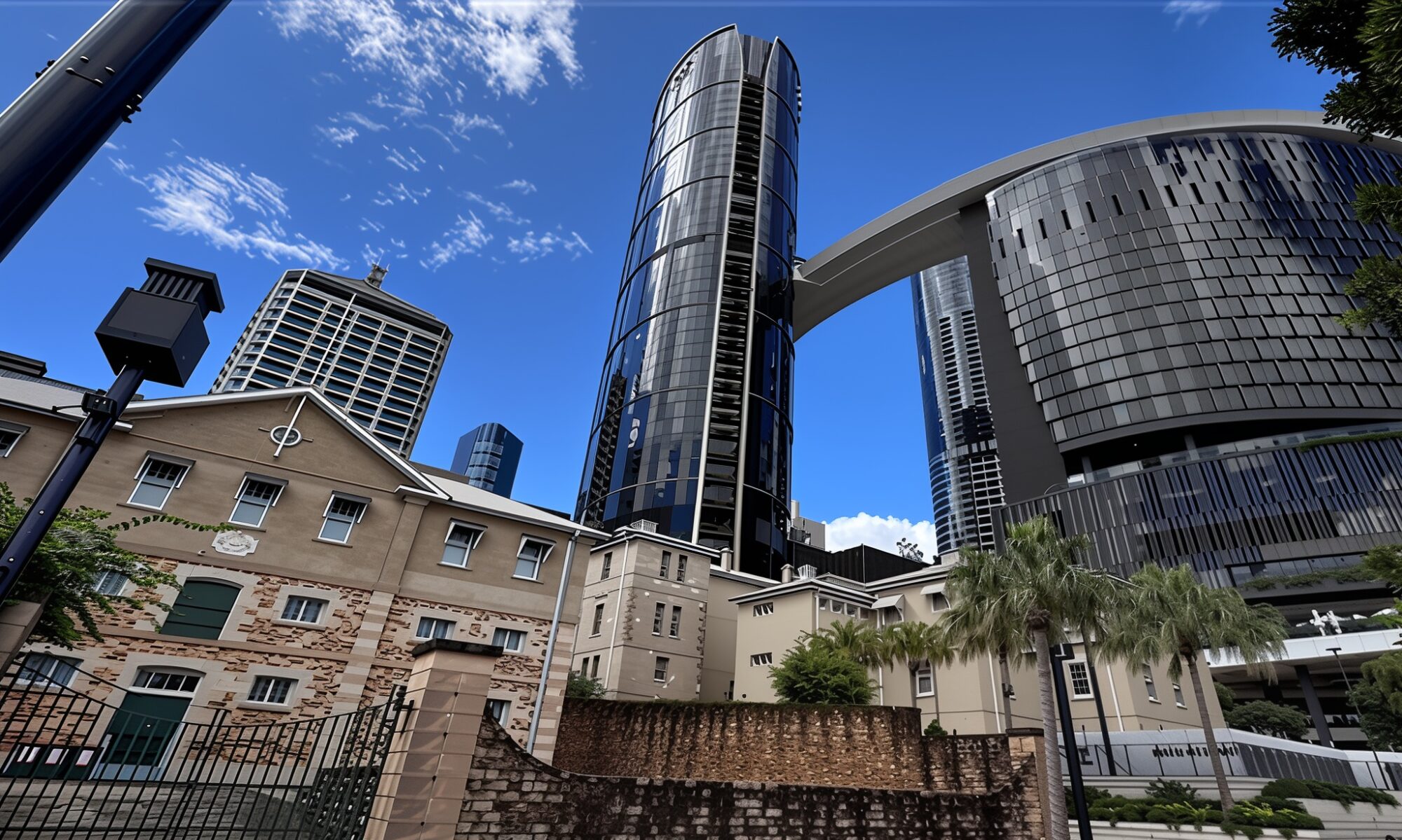
The Future of Australian Cities: Separate Initiatives—or One Connected Strategy?

The issue

Housing, climate, energy, technology and community legitimacy are not separate futures; every decision changes the conditions in which the others must succeed.

How this affects Australians and Queenslanders

For Australians, Australian cities provides a practical test of whether growth and transition can improve economic, environmental and social outcomes together.

For Queenslanders and urban leaders, the lesson is to connect infrastructure, services, community knowledge and long-term stewardship before decisions become locked in.

The second-order risk is fragmented success: individual projects meet their targets while the wider city becomes less coherent, accessible or resilient.

A preferred future would create one connected and adaptive urban strategy.

This shifts the central question from “What should be delivered next?” to: What would cities decide differently if they treated the future as one connected system?

Inclusive Futures Method

  • Unique Uplift: Define an ambitious intergenerational vision that expands choices and shared opportunity.
  • Universal Interest: Establish shared values for fairness, trust, stewardship, access and belonging.
  • Uniting Possibilities: Unite community, First Nations, public, private, scientific and lived-experience knowledge.
  • Unaligned Factors: Realign fragmented initiatives and incentives that undermine the preferred future.
  • Unicity Synthesis: Integrate evidence, inclusion, infrastructure, governance and implementation into one adaptive strategy.

Originally published through Dr Colin Russo’s Engaging Futures LinkedIn urban-futures stream.

Queensland’s Infrastructure Pipeline: More Projects—or More Local Capability?

The issue

A large infrastructure pipeline can expand opportunity, but simultaneous projects also intensify pressure on skills, supply chains, productivity and regional delivery capacity.

How this affects Australians and Queenslanders

For Australians, Queensland provides a practical test of whether growth and transition can improve economic, environmental and social outcomes together.

For Queenslanders and urban leaders, the lesson is to connect infrastructure, services, community knowledge and long-term stewardship before decisions become locked in.

The second-order risk is fragmented success: individual projects meet their targets while the wider city becomes less coherent, accessible or resilient.

A preferred future would create infrastructure investment that leaves stronger local capability.

This shifts the central question from “What should be delivered next?” to: What capability should remain in Queensland after each major project is complete?

Inclusive Futures Method

  • Unique Uplift: Define an ambitious intergenerational vision that expands choices and shared opportunity.
  • Universal Interest: Establish shared values for fairness, trust, stewardship, access and belonging.
  • Uniting Possibilities: Unite community, First Nations, public, private, scientific and lived-experience knowledge.
  • Unaligned Factors: Realign fragmented initiatives and incentives that undermine the preferred future.
  • Unicity Synthesis: Integrate evidence, inclusion, infrastructure, governance and implementation into one adaptive strategy.

Originally published through Dr Colin Russo’s Engaging Futures LinkedIn urban-futures stream.

Metropolitan Governance: Administrative Boundaries—or Shared Urban Outcomes?

The issue

Administrative boundaries rarely match the housing, transport, employment, water and climate systems people depend on each day.

How this affects Australians and Queenslanders

For Australians, Australian metropolitan regions provides a practical test of whether growth and transition can improve economic, environmental and social outcomes together.

For Queenslanders and urban leaders, the lesson is to connect infrastructure, services, community knowledge and long-term stewardship before decisions become locked in.

The second-order risk is fragmented success: individual projects meet their targets while the wider city becomes less coherent, accessible or resilient.

A preferred future would create shared metropolitan outcomes across jurisdictions.

This shifts the central question from “What should be delivered next?” to: Which shared outcome should every participating authority be accountable for?

Inclusive Futures Method

  • Unique Uplift: Define an ambitious intergenerational vision that expands choices and shared opportunity.
  • Universal Interest: Establish shared values for fairness, trust, stewardship, access and belonging.
  • Uniting Possibilities: Unite community, First Nations, public, private, scientific and lived-experience knowledge.
  • Unaligned Factors: Realign fragmented initiatives and incentives that undermine the preferred future.
  • Unicity Synthesis: Integrate evidence, inclusion, infrastructure, governance and implementation into one adaptive strategy.

Originally published through Dr Colin Russo’s Engaging Futures LinkedIn urban-futures stream.

City Progress: More Investment—or Better System Outcomes?

The issue

Progress is not guaranteed by the scale or direction of an urban investment.

More infrastructure, data or development can still weaken trust, access or environmental performance elsewhere in the system.

How this affects Australians and Queenslanders

For Australians, better system tests can improve the long-term value of national infrastructure and urban investment.

For Queenslanders, rapid investment should be assessed against the wider social, economic and ecological future it is intended to create.

The second-order risk is lock-in: more road capacity can induce demand, more data can reduce trust when consent is weak, and more development can create less liveability when infrastructure lags.

A preferred future would make these wider consequences visible before investment closes off better choices.

This shifts the central question from:

How can more be delivered?

to:

Which current strategy assumes that scale automatically means progress—and what wider consequence should leaders test now?

City Progress IFM

IFM Phase One – Unique Uplift: Define progress by durable wellbeing, resilience and capability—not activity or spending alone.

IFM Phase Two – Universal Interest: Establish shared outcomes for fairness, trust and intergenerational value.

IFM Phase Three – Uniting Possibilities: Unite investment with community insight and environmental, social and economic evidence.

IFM Phase Four – Unaligned Factors: Realign measures that reward outputs while shifting costs elsewhere in the system.

IFM Phase Five – Unicity Synthesis: Synthesise portfolios, budgets, measures and learning around whole-city outcomes.

#StrategicForesight

#DecisionMaking

#AustralianCities

#InclusiveFutures

#SystemsThinking


Originally published on LinkedIn: Dr Colin Russo on LinkedIn

Most strategies fail quietly.

Not because the plan was wrong, but because no one tested what happens to the rest of the system once the plan succeeds.

More investment. More infrastructure. More activity. All of it can look like progress on a dashboard — while quietly weakening trust, access or resilience somewhere else in the system.

At Engaging Futures, this is the gap our Inclusive Futures Method (IFM) is built to close.

It's a five-phase way of pressure-testing a strategy before an organisation commits to it — not by asking "will this work," but by asking "what does this strategy assume, and what happens elsewhere in the system if that assumption is wrong."

𝐔𝐧𝐢𝐪𝐮𝐞 𝐔𝐩𝐥𝐢𝐟𝐭 — define progress by durable wellbeing and capability, not activity or spend.

𝐔𝐧𝐢𝐯𝐞𝐫𝐬𝐚𝐥 𝐈𝐧𝐭𝐞𝐫𝐞𝐬𝐭 — establish what fairness and trust actually require, for everyone affected.

𝐔𝐧𝐢𝐭𝐢𝐧𝐠 𝐏𝐨𝐬𝐬𝐢𝐛𝐢𝐥𝐢𝐭𝐢𝐞𝐬 — bring investment, evidence and community insight into the same room.

𝐔𝐧𝐚𝐥𝐢𝐠𝐧𝐞𝐝 𝐅𝐚𝐜𝐭𝐨𝐫𝐬 — find where current measures reward the wrong thing, or shift the cost elsewhere.

Unicity Synthesis — bring it all back together as one whole-system outcome, not five separate wins.

We apply this lens with clients across cities, infrastructure and leadership strategy — and over the coming weeks, we'll be walking through a live example, phase by phase.

Follow Engaging Futures to see how it plays out.

#StrategicForesight

#SystemsThinking

#InclusiveFutures

#DecisionMaking

#IFM


Originally published on LinkedIn: Dr Colin Russo on LinkedIn | Engaging Futures on LinkedIn

Circular Construction: Waste Reduction—or a New Urban Economy?

The issue

The next generation of Australian cities will be built partly from the materials already inside them.

Construction and demolition choices determine waste, embodied emissions, supply resilience and future adaptability.

How this affects Australians and Queenslanders

For Australians, circular construction can reduce exposure to volatile material supply chains while creating new skills, markets and local industry.

For Queenslanders, the scale of the growth pipeline can support viable recovery and reuse markets if demand is coordinated early.

The second-order opportunity is economic: designing for disassembly and material recovery can create durable local capability, not simply reduce landfill.

A preferred future would connect procurement standards, material information, storage, markets and design practices as one system.

This shifts the central question from:

How can a project reduce construction waste?

to:

Which major project could use its purchasing power to create a durable market for recovered materials?

Circular Construction IFM

IFM Phase One – Unique Uplift: Turn material reuse into local jobs, affordable construction and a low-carbon urban economy.

IFM Phase Two – Universal Interest: Establish shared values for stewardship, quality, safety and fair access.

IFM Phase Three – Uniting Possibilities: Unite designers, builders, suppliers, recyclers, regulators, researchers and communities.

IFM Phase Four – Unaligned Factors: Realign procurement, standards, approvals and incentives from demolition waste toward reuse.

IFM Phase Five – Unicity Synthesis: Integrate material data, design for disassembly, markets, workforce and precinct logistics.

#CircularEconomy

#ConstructionFutures

#SustainableCities

#InclusiveFutures

#QueenslandIndustry


Originally published on LinkedIn: Dr Colin Russo on LinkedIn

Climate Insurance: A Household Cost—or an Urban Inequality Multiplier?

The issue

Climate risk can become an urban inequality multiplier through insurance.

Premiums, exclusions and property values can reshape who is able to remain in a place. The impact extends to mortgages, council revenue, local investment and community continuity.

How this affects Australians and Queenslanders

For Australians, insurance availability can influence housing markets, financial stability and the national distribution of disaster costs.

For Queenslanders, hazard-exposed communities need transparent risk information and fair adaptation pathways before financial pressure accelerates displacement.

The second-order risk is a resilience divide: communities with fewer resources face higher exposure and less capacity to fund adaptation while investment flows toward already protected areas.

A preferred future would use infrastructure and adaptation priorities to reduce—not reinforce—this divide.

This shifts the central question from:

How can households manage rising premiums?

to:

Which community could become financially unviable before it becomes physically uninhabitable—and what decision is needed now?

Climate Insurance IFM

IFM Phase One – Unique Uplift: Define a hopeful future in which hazard-exposed communities remain safe and financially viable.

IFM Phase Two – Universal Interest: Establish shared principles for transparency, fairness, solidarity and intergenerational responsibility.

IFM Phase Three – Uniting Possibilities: Unite insurers, lenders, governments, planners, communities and climate expertise.

IFM Phase Four – Unaligned Factors: Realign premiums, risk signals, housing and infrastructure so vulnerability is not compounded.

IFM Phase Five – Unicity Synthesis: Integrate physical adaptation, financial protection, housing transition and community support.

#ClimateFinance

#InsuranceRisk

#EquitableCities

#InclusiveFutures

#QueenslandFutures


Originally published on LinkedIn: Dr Colin Russo on LinkedIn

Course 1 of 12: The Inclusive Futures Method

Engaging Futures proudly presents 12 online courses, each structured around five focused lessons designed to build practical futures capability.

The collection brings together:

🔹 Six Foundational Futures Methods — introducing the core tools and frameworks for understanding, exploring and shaping the future.

🔹 Six Executive Leadership Pathways — helping leaders apply futures thinking to strategy, engagement, decision-making and organisational transformation.

We begin with Course 1: The Inclusive Futures Method.

How do we move from a difficult futures issue to an ethical, coherent and intergenerational pathway?

The Inclusive Futures Method Online Training Course introduces five connected phases developed by Dr Colin Russo:

🔹 Unique Uplift — create distinct and ambitious strategies for a hopeful future.

🔹 Universal Interest — establish shared values that strengthen trust and cooperation.

🔹 Uniting Possibilities — use diversity as a strength.

🔹 Unaligned Factors — identify and realign actions, incentives and systems that do not support the vision.

🔹 Unicity Synthesis — integrate the phases into a cohesive and sustainable pathway towards intergenerational futures.

This course is designed for executives, strategists, policy and planning professionals, community leaders, educators, facilitators, advisers, entrepreneurs, students and changemakers.

Participants are guided to develop practical outputs that support better futures thinking, including:

• hopeful strategic possibilities

• shared values for cooperation

• a stronger understanding of diverse perspectives

• an alignment review of current actions and systems

• an integrated pathway towards a preferred future

The course provides a practical introduction to a method designed to help people and organisations move beyond fragmented thinking and create futures that are more inclusive, ethical and sustainable.

Begin the course:

https://lnkd.in/gs7Tw5jt

Dr Colin Russo

Futurist, author and CEO

Engaging Futures

#InclusiveFuturesMethod

#FuturesThinking

#StrategicForesight

#ExecutiveLeadership

#LeadershipDevelopment

#Strategy

#CommunityEngagement

#Sustainability

#IntergenerationalFutures

#EngagingFutures


Originally published on LinkedIn: Dr Colin Russo on LinkedIn

Local Access: More Travel—or Better Everyday Opportunity?

The issue

A successful city should not require long travel for an ordinary life.

Local access is not about containing people within neighbourhoods. It is about expanding choice by placing services, education, care, recreation and employment within practical reach.

How this affects Australians and Queenslanders

For Australians, stronger local centres can reduce household costs, congestion and infrastructure demand while supporting small business.

For Queenslanders, South East Queensland can combine reliable regional transport with stronger centres that meet more everyday needs locally.

The second-order benefit is systemic: shorter trips strengthen social connection, local commerce and service resilience.

A preferred future would give people both nearby essentials and dependable access to wider metropolitan opportunity.

This shifts the central question from:

How can people travel farther and faster?

to:

Which everyday need currently requires unnecessary travel—and what local capability would change that future?

Local Access IFM

IFM Phase One – Unique Uplift: Create neighbourhoods with nearby essentials and dependable access to wider opportunity.

IFM Phase Two – Universal Interest: Establish shared values for access, dignity, choice and fairness.

IFM Phase Three – Uniting Possibilities: Unite residents, small business, transport, care, education and land-use planning.

IFM Phase Four – Unaligned Factors: Realign investment that forces unnecessary travel or concentrates access in too few places.

IFM Phase Five – Unicity Synthesis: Integrate local centres, regional transport, digital access and service planning.

#LocalAccess

#ConnectedCommunities

#FutureCities

#InclusiveFutures

#SouthEastQueensland


Originally published on LinkedIn: Dr Colin Russo on LinkedIn