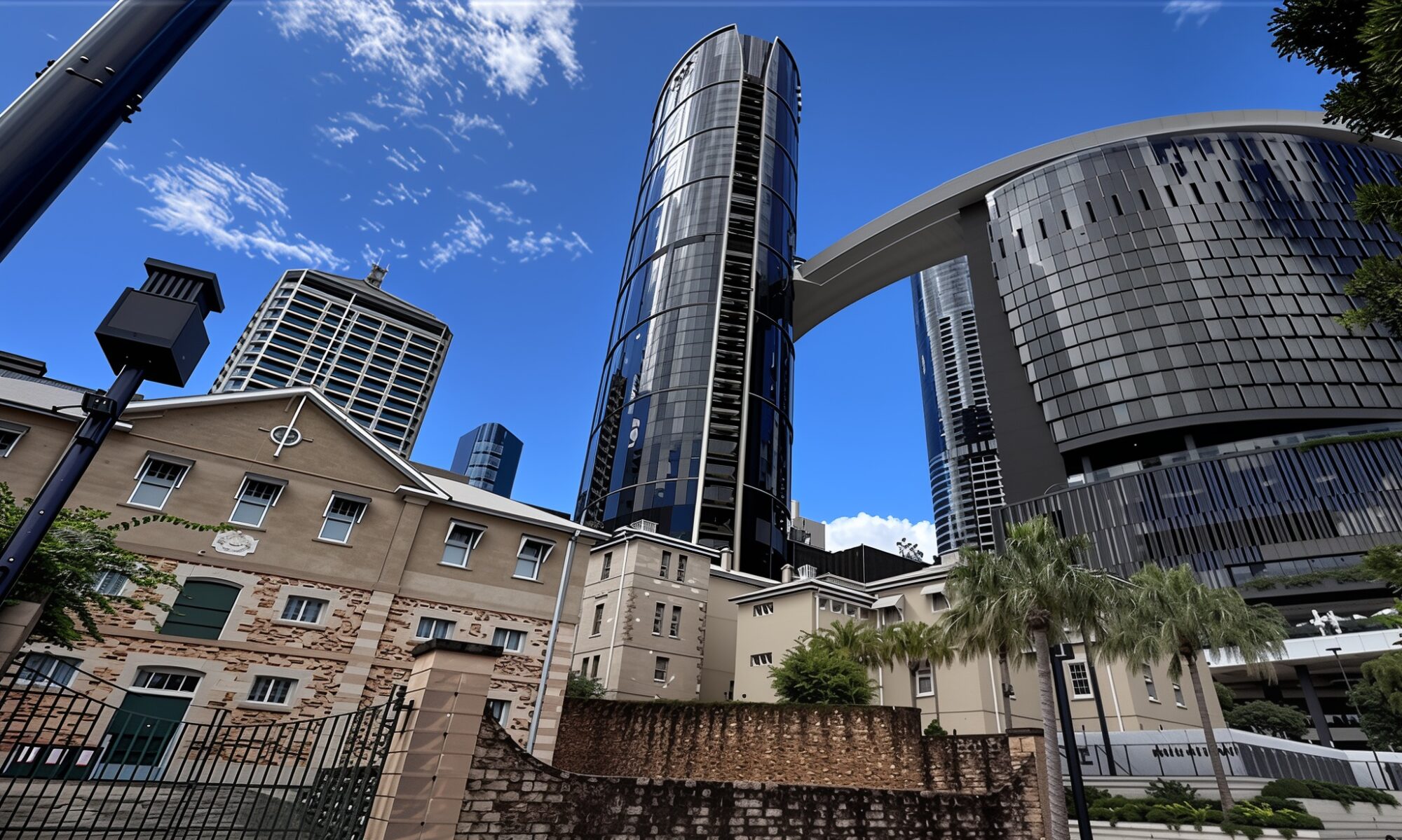
Brisbane 2032: An Event Deadline—or a Regional Transformation Deadline?

**The issue**

Brisbane 2032 should not be treated simply as a deadline for delivering venues and staging a successful Olympic and Paralympic Games.

It should be treated as a deadline for transforming South East Queensland.

The strongest legacy will not be measured only by projects completed. It will be measured by whether investment in transport, housing, public spaces and local capability leaves the region more connected, inclusive and resilient after the closing ceremony.

How this affects Australians and Queenslanders

For Australians, Brisbane 2032 is a major opportunity to demonstrate how investment in a global event can create lasting national value.

For Queenslanders, the consequences will be more immediate. Accelerated development may improve mobility, employment, skills and access to opportunity—but those benefits may not be shared evenly.

The second-order risk is that investment becomes concentrated around a small number of precincts while increasing housing, transport and infrastructure pressures elsewhere. A project can succeed operationally while widening the distance between communities that have access and those that do not.

A preferred legacy would connect Brisbane’s investment with Ipswich, Logan, Moreton Bay, the Gold Coast and the Sunshine Coast through durable transport access, local capability, skills development and economic opportunity.

The IFM futures method clarifies the issue

Through the first phase of IFM —Unique Uplift, Queensland should first define the ambitious and inclusive regional legacy it wants to create. Individual 2032 projects should then be selected and aligned with that preferred future.

This shifts the central question from:

What must Queensland deliver by 2032?

to:

What must be true in 2042 for Queenslanders to say that Brisbane 2032 improved the region including its disaster relief funding the LGAQ has advised is a major priority —not only the event?

Source: Brisbane City Council, Making our Mark — https://lnkd.in/gwH5d4RW

#Brisbane2032

#RegionalLegacy

#QueenslandFutures

#InclusiveFutures

#SouthEastQueensland


Originally published on LinkedIn: Dr Colin Russo on LinkedIn

Climate resilience should not be an emergency function added after a city has been designed. It should be visible in the ordinary places people use every day.

For Brisbane and other Australian capitals, tree canopy, shade, cool materials, wetlands, floodable parks, water-sensitive streets and resilient transport are essential civic infrastructure.

The second-order benefit is substantial. A shaded street reduces heat exposure, but it can also increase walkability, local commerce and social connection. A floodable park can manage stormwater while providing recreation, biodiversity and neighbourhood identity during normal conditions.

The strategic test is whether resilience strengthens health, access and liveability every day—especially for communities with the least capacity to absorb disruption.

Which current capital-city investment could be redesigned to deliver both daily public value and protection during future climate extremes?

#ClimateResilience

#FutureCities

#Brisbane


Originally published on LinkedIn: Dr Colin Russo on LinkedIn

South East Queensland’s growth challenge is not simply how to build more homes. It is how to build access.

The Queensland Government’s ShapingSEQ 2023 anticipates that the region could grow from 3.8 million people to around six million by 2046—requiring almost 900,000 additional homes and almost one million additional jobs.

That scale of change demands more than dwelling targets. Housing, transport, employment, health, education and public space must be designed as one connected system across Brisbane, Ipswich, Logan, Moreton Bay, the Gold Coast, Sunshine Coast and Toowoomba.

The second-order risk is clear: if housing supply expands without comparable access to services and opportunity, an apparently affordable home can create higher lifetime costs through long commutes, transport dependence and reduced participation.

The preferred future is a polycentric region: distinct urban centres connected by reliable transport, diverse housing and strong local economies. Density then becomes a means of improving access—not an end in itself.

What measure of access should every major housing decision in South East Queensland be required to improve?

#AustralianCities

#QueenslandFutures

#UrbanForesight


Originally published on LinkedIn: Dr Colin Russo on LinkedIn

The June 2026 Australian vehicle sales tell a much bigger story than simply who sold the most cars.

For decades, the Ford Ranger and Toyota HiLux defined the Australian dream—strength, reliability and the open road. They are still there. But now the top seller is the Tesla Model Y, with BYD placing three vehicles in the Top 10.

This isn’t just a shift in consumer preference. It’s a transition in civilisation.

We’re moving from the age of internal combustion to the age of electrification, software and artificial intelligence. Vehicles are becoming computers on wheels, connected to our homes, our energy systems and, increasingly, to autonomous technologies.

The rise of Chinese manufacturers alongside established Western and Japanese brands also reflects a changing global balance of industrial capability. Competition is accelerating innovation, lowering prices and expanding consumer choice.

At the same time, Australians haven’t abandoned utility. The Ranger, HiLux and D-Max remain among the nation’s favourites, showing that practicality still matters. The future isn’t replacing the past overnight—it is layering new technologies onto enduring needs.

Futures thinking reminds us that transitions are rarely about one technology replacing another. They are about societies adapting to new possibilities while carrying forward what continues to create value.

June 2026 may well be remembered as another milestone in Australia’s journey towards an AI-enabled, electrified and increasingly connected future. The vehicles we choose today are telling us a great deal about the world we are building tomorrow.


Originally published on LinkedIn: Dr Colin Russo on LinkedIn

If our water infrastructure were a car, it would be vintage.

That simple observation from Alison Smith and the LGAQ captures a much bigger challenge facing Queensland.

Through the lens of the Inclusive Futures Method (IFM), this is not simply a discussion about pipes, pumps and treatment plants.

It is a discussion about the future we want to create.

Unique Advancement: A Queensland where every community has safe, reliable and affordable water.

Universal Interest: Every Queenslander depends on water, regardless of postcode, politics or profession.

Uniting Possibilities: State Government, local government, utilities, industry and communities working together to renew critical infrastructure.

Unaligned Factors: Ageing assets, funding gaps, population growth, climate pressures and more than $5 billion in renewal requirements.

Unicity Synthesis: A coordinated long-term strategy that renews infrastructure before failure and secures water resilience for future generations.

One statistic stood out to me.

A water main breaks somewhere in Queensland approximately every 73 minutes.

That is not just an engineering statistic.

It is a reminder that some of our most important assets are also our most invisible.

The best infrastructure investment is often the one nobody notices because nothing failed.

Congratulations to Alison Smith and the LGAQ team for bringing attention to an issue that affects every Queenslander every day.

💧 Renew before failure.

💧 Invest before crisis.

💧 Secure Queensland's water future.

#LGAQ

#Queensland

#WaterSecurity

#Infrastructure

#FuturesThinking

#InclusiveFutures

#Liveability


Originally published on LinkedIn: Dr Colin Russo on LinkedIn

Does AI have an accent?

In Futures Thinking we use CLA by Sohail Inayatullah to layer worldviews in with litanies of topics, along with their systems and myths. But are our worldviews changing as we train our minds using AI?

Most people think AI sounds American because many early voice systems were trained, designed, and commercialised through U.S.-based companies and datasets.

But AI does not inherently belong to one accent, one nation, or one worldview.

Increasingly, AI reflects the culture, cadence, and communication style of the person interacting with it.

So I imagined asking people from different cultures one simple question:

“What is the future?”

The answers were all different.

Australian:

Practical collaboration between people, technology, and the environment.

Irish:

A shared story we choose to believe in before it arrives.

American:

Bold innovation moving faster than the problems ahead.

New Zealander:

Balance between progress, people, and the land.

Chinese:

Long-term harmony between innovation, stability, and collective prosperity.

Then I asked another question:

“What voice does AI itself speak in?”

Perhaps the answer is this:

AI increasingly speaks in the cultural rhythm of the person engaging with it.

The future may not be one dominant global voice.

It may be humanity finally learning how to speak meaningfully with itself through new forms of intelligence.


Originally published on LinkedIn: Dr Colin Russo on LinkedIn